Portal and chat intake
A question arrives. A sourced answer goes back.
Not every question arrives as a questionnaire. Somebody asks in Slack, in Teams, or through an intake portal. This page is what happens to that question, and why the answer matches the one a formal document would have given.
From the question to the answer, in the same thread
Five steps. The second is the one that stops chat answers and formal answers drifting apart.
- 01
Someone asks, wherever they are
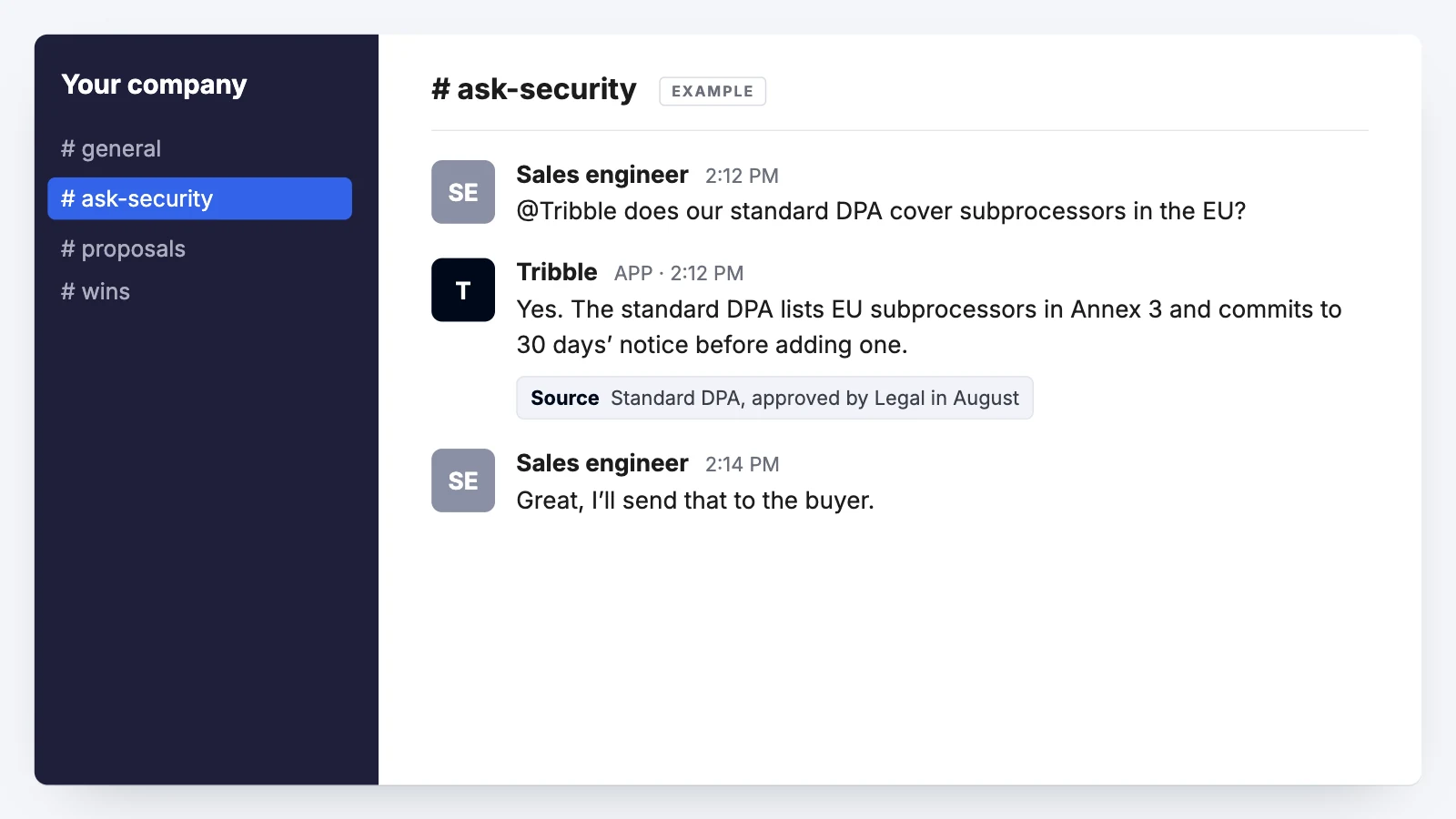
A seller in Slack, a solutions engineer in Teams, a buyer in an intake portal. The question arrives in the place the person already works rather than in a queue somebody has to remember to check.
- 02
It is matched to approved content
The same governed set of answers that the questionnaires and RFPs draw on. There is no second library for chat, which is how a chat answer and a formal answer start to disagree.
- 03
The answer comes back with its source
In the thread it was asked in, with the document named. The person who asked can see where it came from without leaving the conversation.
- 04
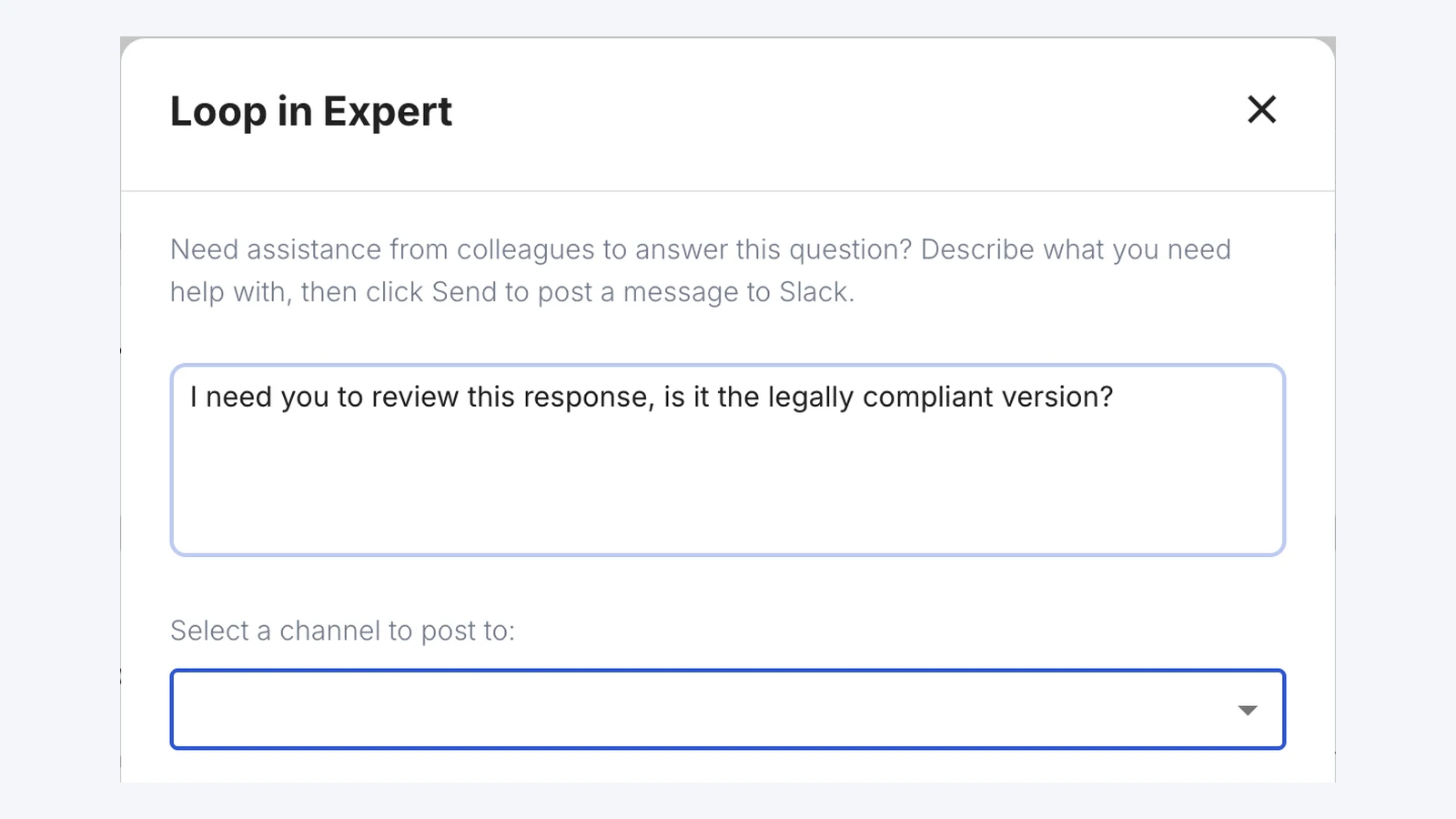
Anything uncovered is routed
If approved content does not cover it, the question goes to the owner of that area rather than being answered approximately. The asker is told it is with someone, not left waiting.
- 05
The answer is kept
Once it is approved it becomes approved content, so the next person who asks in any channel gets the same answer, and so does the next questionnaire.
Why the chat answer and the formal answer agree
A second knowledge base for chat is how a seller is told one thing and a buyer another. There is only one.
One set of approved content
Chat, the portal, the questionnaire and the RFP all draw on the same answers, so none of them can quietly contradict the others.
The source travels with the answer
The document is named in the thread, so an answer can be forwarded without going to find the backup first.
Routed, not guessed
Where nothing approved covers the question it goes to an owner, and the person who asked is told so.
Answered once
An approved answer is kept, so the second person to ask gets it immediately and so does the next document.
Permission aware
Access follows the permissions people already have. Nobody is shown evidence they could not open themselves.
Questions that come up on intake
The ones that come up on nearly every call.
Where can people ask?
Slack, Microsoft Teams, or an intake portal a buyer uses directly. The answer comes back in the same place, so nobody has to move the conversation to get it.
Is this a different knowledge base from the one the RFPs use?
No, and that is the point. A separate library for chat is how a seller is told one thing in Slack and a buyer is told another in a questionnaire. Both draw on the same approved content.
What happens when nobody has approved an answer yet?
It is routed to whoever owns that area rather than answered approximately, and the person who asked is told it is with someone. Once it comes back it is kept, so the question is only asked once.
Does an answer given in chat show its source?
Yes. The document is named alongside the answer in the thread, so a seller can forward it to a buyer without having to go and find the backup first.
Can buyers ask directly?
Through an intake portal, yes. The same governance applies: sourced answers, nothing unapproved, anything uncovered routed to an owner.
Read next
Tribble Respond is the product this runs on, alongside RFPs, security questionnaires, DDQs and long-form responses. Security questionnaires is the same approved content answering a formal document.
See it answer a question from your own stack
Thirty minutes, nothing to prepare. Bring a question your reps ask constantly, or we will use ours.